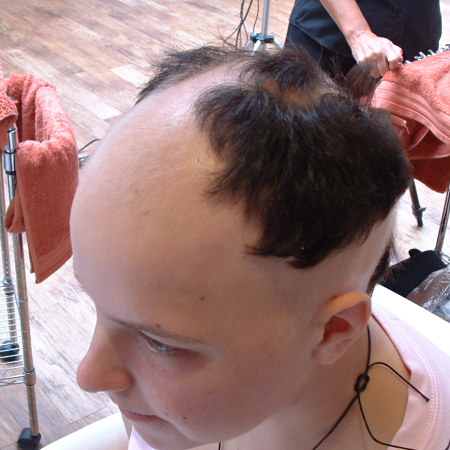
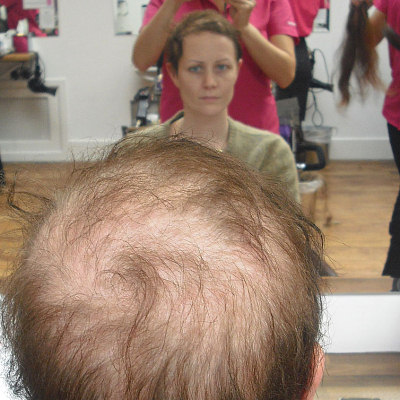
Hair loss can be tough. Hair does a lot to define the way we want to project ourselves to the world, and being in control of the colour, length, and style does a lot to help us feel like the best of ourselves. When you’re suffering from hair loss, all of these possibilities seem tragically out of reach.
The factors that cause hair loss are numerous, and in the end, the root of the matter really does differ from person to person. It’s important to find out exactly what’s wrong so you can start to look for solutions. When you find yourself in a situation where your hair will take some time to regrow, Lucinda Ellery can help with a broad selection of the finest hair extensions available.
Feeling demure and sophisticated? A conservative bob that frames the contours of your face will do a lot to help you express quiet confidence. For those days when you want to be a bit more edgy and spontaneous, go wild with a short crop or even an adventurous dye job! Free yourself from the restrictions of hair loss and regain that confidence.
Take your time and watch Lucinda Ellery reviews, and discover just how their services have helped many women bring their crowning glory to life!
Monday, April 27, 2015
Saturday, April 25, 2015
Facts about Chemo Therapy and Hair Loss
One of the most common side-effects of chemotherapy is hair loss, which can be distressing to a woman. It is important to understand that although it is common, it is not guaranteed that hair loss will occur; in fact losing hair will depend on the type of drug used during the treatment. Other women will experience mild thinning that is only obvious to them, but it might cause the same level of distress. Lucinda Ellery reviews the basic facts concerning hair loss during chemotherapy and offers helpful tips on managing this side-effect.
When considering the options to disguise your hair loss from chemotherapy, always consult with a doctor. They will refer you to a specialist who can give you the full head of hair you are looking for, while considering your condition.
The Facts
If hair loss is indeed a side-effect of the treatment, it will almost always grow back after the treatments are over, but do not be surprised if the colour and texture is different. Hair loss will not be limited to the scalp; expect to lose hair all over your body throughout the chemotherapy period. Hair loss also happens gradually, only after a few treatment sessions. The hair will most likely fall out slowly or in clumps, it is common for women to shave their heads as any remaining hair will become dull and dry.Tips to Help Deal with Hair Loss
It will be an uncomfortable experience, but these tips may help you through the hair loss.- Use mild shampoos to avoid irritating and drying the scalp.
- Only use soft-bristle hair brushes as the scalp may be very sensitive.
- Do not dye or perm hair while undergoing chemotherapy.
- Protect your scalp by using sunscreen, hats, scarfs, or wigs.
- Use gentle creams or lotion while massaging your scalp to give relief from sensitivity.
When considering the options to disguise your hair loss from chemotherapy, always consult with a doctor. They will refer you to a specialist who can give you the full head of hair you are looking for, while considering your condition.
Thursday, April 23, 2015
Preparing for a Hair Loss Consultation
Although over 8 million women in Britain struggle with some form of hair loss, it is still a traumatising condition to accept. Lucinda Ellery reviews the importance of seeking medical guidance from your GP or dermatologist. When you are starting to notice an excessive amount of hair shedding, consulting with your doctor can help you determine the reason behind the thinning. When compared to men whose balding is typically genetic, women may have underlying health issues that need to be addressed immediately. To make it easier for your GP come prepared with the following:
These are some of the general questions you should consider asking your GP on your first consultation. It is a hurdle to overcome, but rest assured that your doctor will provide you with the answers and solutions you are looking for.
- Important personal information like recent lifestyle changes (diet and exercise routine) and major stresses.
- A list of all medications, including supplements, and vitamins you are taking.
- A list of questions to ask.
Helpful Questions to Ask Your Doctor
It is perfectly normal to be nervous and curious about your condition. To help the diagnosis go faster while at the same time giving you peace of mind concerning your situation, here are a few questions that you should ask your doctor:- What are the possible reasons for my symptoms or condition?
- Are there specific tests I need to undergo?
- Is my condition temporary or chronic?
- Are there restrictions I should know about?
- Should I consult with a specialist?
These are some of the general questions you should consider asking your GP on your first consultation. It is a hurdle to overcome, but rest assured that your doctor will provide you with the answers and solutions you are looking for.
Monday, March 2, 2015
Female Hair Loss Causes
It is normal to lose hair. It happens to everyone. It happens while you brush your hair and while you take a bath. On an average, everyone loses fifty to a hundred hair strands a day. That is the normal cycle of growth and renewal and as long as the balance is maintained then your hair remains thick and healthy. But with hair loss, where more hair is lost than is being replaced, then it may be a sign of a more serious medical condition that needs evaluation from professionals for possible treatment. Your first step should always be to visit your GP but knowing which hair loss condition you are experiencing can greatly help you in deciding how to deal with it.
Telogen Effluvium is a phenomenon that starts after pregnancy, major surgery, weight loss, and extreme stress. Fortunately it is usually temporary and regrowth starts once the cause has been resolved.
Hereditary hair loss, also known as androgenetic alopecia or female pattern hair loss is the most common cause of hair loss. You might have inherited the gene from either your mother or father’s side of the family.
Alopecia Areata is an auto-immune response which causes hair growth to stop. It can result in bare patches or even complete loss in rare cases but can also sometimes be reversed and the hair grows back, but it is very unpredictable.
Far less common are Hypothyroidism which is due to thyroid disease and Lupus which is a chronic autoimmune disease that can trigger hair loss in women as well as other symptoms. It tends to strike during their childbearing years.
Don’t let hair loss bring you down. Do some research about your condition. Watch Lucinda Ellery reviews for the stories of women who have suffered from hair loss but got back on track. For effective solutions on hair loss, trust Lucinda Ellery.
Telogen Effluvium is a phenomenon that starts after pregnancy, major surgery, weight loss, and extreme stress. Fortunately it is usually temporary and regrowth starts once the cause has been resolved.
Hereditary hair loss, also known as androgenetic alopecia or female pattern hair loss is the most common cause of hair loss. You might have inherited the gene from either your mother or father’s side of the family.
Alopecia Areata is an auto-immune response which causes hair growth to stop. It can result in bare patches or even complete loss in rare cases but can also sometimes be reversed and the hair grows back, but it is very unpredictable.
Far less common are Hypothyroidism which is due to thyroid disease and Lupus which is a chronic autoimmune disease that can trigger hair loss in women as well as other symptoms. It tends to strike during their childbearing years.
Don’t let hair loss bring you down. Do some research about your condition. Watch Lucinda Ellery reviews for the stories of women who have suffered from hair loss but got back on track. For effective solutions on hair loss, trust Lucinda Ellery.
Thursday, February 26, 2015
Understanding Trichotillomania
Do you constantly pull out your hair, eyebrows or eyelashes? Are you seeing bald patches? You may be suffering from trichotillomania. It is an impulse control disorder characterised by the compulsive urge to pull out hair; leading to distress, balding and hair loss. Individuals with this condition may not be aware that they are pulling out too much of their hair. And women are more likely to be affected than men. If you are experiencing this disorder, the first step to combat it is understanding the condition.
So, how and when does this condition start? Symptoms of compulsive hair-pulling can start around the ages of 12 and 13; even though it is not uncommon for it to start at a much younger age. Sometimes , a stressful event can be related with the onset of this condition, like a bereavement, school-related problems, abuse or family conflict. Symptoms can also be triggered by pubertal hormonal changes.
There is no certain cause of trichotillomania. But if you see an uneven appearance to your hair, bare patches - find yourself constantly tugging, pulling or twisting your hair, or if you feel a sense of satisfaction, pleasure and gratification after pulling your hair - these are indications that you have the disorder. Lucinda Ellery will help you to regain the confidence and the hair you have lost. You may check out Lucinda Ellery reviews for the women who got better.
So, how and when does this condition start? Symptoms of compulsive hair-pulling can start around the ages of 12 and 13; even though it is not uncommon for it to start at a much younger age. Sometimes , a stressful event can be related with the onset of this condition, like a bereavement, school-related problems, abuse or family conflict. Symptoms can also be triggered by pubertal hormonal changes.
There is no certain cause of trichotillomania. But if you see an uneven appearance to your hair, bare patches - find yourself constantly tugging, pulling or twisting your hair, or if you feel a sense of satisfaction, pleasure and gratification after pulling your hair - these are indications that you have the disorder. Lucinda Ellery will help you to regain the confidence and the hair you have lost. You may check out Lucinda Ellery reviews for the women who got better.
Friday, February 20, 2015
The Intralace Freewear SystemTM the Hair Loss Replacement
For the team at The Consultancy, it has been a mission to provide women who are dealing with hair loss with the best solutions and numerous options. Clients who have given Lucinda Ellery feedback about their needs have been heard, and an alternative to the traditional wig has been developed. The Intralace Freewear SystemTM is a different approach to concealing hair loss because it is made with real human hair and will match a woman’s natural colouring and face shape.
The Ideal Solution
Wigs, even those that are made with real human hair, are sometimes not the ideal solution for a woman, particularly for those who have varying degrees of hair loss throughout their scalp. The Intralace Freewear SystemTM addresses this issue because it makes women feel as if it is their very own head of hair. This impacts their confidence and the way they see themselves compared to donning a wig every day.The Consultancy’s Unique Approach
You cannot find a wig when you visit The Consultancy because we believe that women deserve more than just a wig as a hair loss solution. Instead, there are options that are available to better suit their needs and properly conceal the loss of hair while making them look beautiful and feeling confident in themselves. There are two options depending on the degree of hair loss: For partial hair loss Intralace SystemTM is available. · For total or near total hair loss Intralace Freewear SystemTM is suggested as a solution. The women who have turned to the Intralace SystemTM and have given Lucinda Ellery feedback have agreed that these alternatives are better than a wig. Regain your confidence and a full head of healthy and natural looking hair. Consult with an expert now.Sunday, February 15, 2015
Managing Female Hair Loss with the IntralaceTM Options
There are many reasons why women struggle with hair loss. It can be due to hormonal changes during menopause, from medical treatments like chemotherapy, or even from the physical and emotional stresses of everyday life. Depending on the cause of the hair loss, the severity of the condition can vary. Clients that provide Lucinda Ellery feedback now have more options when it comes to The Consultancy exclusive IntralaceTM solution.
Intralace MinimaTM
The latest hair loss treatment option, Intralace MinimaTM is specifically designed for women dealing with hair thinning or hair loss at the fringe, parting and crown area. The Minima is fully integrated with the natural hair which gives the freedom to treat it like it is your own.Intralace System Hair PartingTM
Using the top section of the Intralace SystemTM, the Intralace System Hair PartingTM is created as an option for daytime use only. It is applied on the existing hair using clips and it comes in two formats. Type A requires a fringe to be attached with a silk-based hair parting. Type B uses the natural hairline parting and can be worn with any style.Intralace SystemTM
Constructed from a breathable mesh and integrated into the existing hair, the Intralace SystemTM is one of the most effective solutions for moderate to severe hair loss or thinning. Many clients have given Lucinda Ellery feedback on how well the system works for managing the later stages of hair loss. These hair loss solutions and the techniques to be applied are exclusive to clients of The Consultancy. Dealing with hair loss is a serious matter which should only be entrusted to professionals who will work with you to give you the best possible solutions available.
Subscribe to:
Posts (Atom)